Hi everyone! We've just released Chrome Beta 148 (148.0.7778.4) for Android. It's now available on Google Play.
You can see a partial list of the changes in the Git log. For details on new features, check out the Chromium blog, and for details on web platform updates, check here.
If you find a new issue, please let us know by filing a bug.
The Chrome team is excited to announce the promotion of Chrome 148 to the Beta channel for Windows, Mac and Linux. Chrome 148.0.7778.5 contains our usual under-the-hood performance and stability tweaks, but there are also some cool new features to explore - please head to the Chromium blog to learn more!
A partial list of changes is available in the Git log. Interested in switching release channels? Find out how. If you find a new issue, please let us know by filing a bug. The community help forum is also a great place to reach out for help or learn about common issues.
The Extended Stable channel has been updated to 146.0.7680.188for Windows and Mac which will roll out over the coming days/weeks.
A full list of changes in this build is available in the log. Interested in switching release channels? Find out how here. If you find a new issue, please let us know by filing a bug. The community help forum is also a great place to reach out for help or learn about common issues.
Here is Dean Ball on Mythos. And now more from Dean. Here is John Loeber. While I am seeing some likely overstatement, probably this is a real turning point nonetheless, and we need to think further about what is best to do. No b.s. on data center slowdowns and algorithmic discrimination, rather actual thought on how to regulate something that actually will matter. And be glad we got there first. But how long will it be before an open source version, even if somewhat inferior, is available? Will OpenAI and Google soon be showing similar capabilities? (And how will that shift the equilibrium?) Should we upgrade our estimates of the returns to investing in compute? How will the willingness of attackers to pay for tokens evolve, relative to the willingness of defenders to pay for tokens? Which are our softest targets? As a side effect, will this also lead to higher economic concentration, as perhaps only the larger institutions can invest in quality patches rapidly enough? How many things will be taken offline altogether? It was the government of Singapore that started moving in that direction in 2016 with their Internet Surfing Separation. Which of the pending hacks and leaks will embarrass you the most?
And if nothing else, this is proof we are not all going to be jobless, albeit for reasons that are not entirely positive.
Two new papers/initiatives indicate severe risks from AI, interestingly in opposite directions. The first is that the most advanced frontier models are now capable of finding and exploiting software in ways that could be used to crash or control pretty much all the world’s major systems.
Anthropic: We formed Project Glasswing because of capabilities we’ve observed in a new frontier model trained by Anthropic that we believe could reshape cybersecurity. Claude Mythos2 Preview is a general-purpose, unreleased frontier model that reveals a stark fact: AI models have reached a level of coding capability where they can surpass all but the most skilled humans at finding and exploiting software vulnerabilities.
Mythos Preview has already found thousands of high-severity vulnerabilities, including some in every major operating system and web browser. Given the rate of AI progress, it will not be long before such capabilities proliferate, potentially beyond actors who are committed to deploying them safely. The fallout—for economies, public safety, and national security—could be severe. Project Glasswing is an urgent attempt to put these capabilities to work for defensive purposes.
That’s from Anthropic. The irony is that the company that has developed a frontier model capable of infiltrating and undermining more or less any computer system in the world is the one that has been forbidden from working with the US government. It’s as if a private firm developed nuclear weapons and the American government refused to work with them because they were too woke. Okey dokey.
The second paper on AI risks is AI Agent Traps from Google DeepMind. They point out that AI agents on the web are vulnerable to all kinds of attacks from things like text in html never read by humans, hidden commands in pdfs, commands encoded in the pixels of images using steganography and so forth.
Putting this together we have the worrying combination that very powerful AI’s are very vulnerable. Will AI solve the problems of AI? Eventually the software will be made secure but weird things happen in arms races and its going to be a bump ride.
Listen to the author reading this blog post. by Kate Woodford If, like me, you spent your spare time last month watching the Winter Olympics, you’ll know how exciting it was. I enjoyed everything about it. When I wasn’t watching the events or admiring the fabulous scenery, I was looking at the spectators as they …
We study the effects of large-scale humanitarian aid using novel data from the American Relief Administration’s (ARA) intervention during the 1921-1922 famine in Soviet Russia. We find that the allocation of relief closely tracked underlying food scarcity and was uncorrelated with subnational politics. We show that ARA rations reduced food prices, raised caloric intake, lowered the prevalence of relapsing fever, and increased rural birth cohorts. The aid benefited poorest peasants most and proved most effective in provinces with higher levels of human capital. Back-of-the-envelope calculations suggest that, absent ARA relief, the 1926 population would have been 4.4 million lower.
That is from a new paper by Natalya Naumenko (my colleague), Volha Charnysh, and Andrei Markevich.
These yellow rings are not superimposed on an existing photograph — they’re actually painted on the landscape. Swiss artist Felice Varini created Three Ellipses for Three Locks in 2014 by painting segments on roads, walls, and nearly 100 buildings in the historic center of Hasselt, Belgium. The effect was visible only to a viewer in one particular vantage point.
Cowen is excellent on the question of why the marginalist insight had to wait so long, and why it eventually came in a simultaneous eruption across countries and three intellectual temperaments. The answer involves the slow assembly of preconditions: advances in calculus, the rise of statistical thought, the professionalization of economics as a discipline, and certain changes in the philosophy of science associated with the Victorian debate between inductive and deductive methods. Progress in science, Cowen suggests, is rarely a matter of the lone genius, but rather of the alignment of previously dispersed elements. The genius arrives when the ground has been prepared to receive the insight.
And another:
There is a discomforting codicil to all of this. Perhaps, Cowen suggests near the book’s end, the intuitions of 20th-century microeconomics were always a kind of compensation for a deeper ignorance. Perhaps we elevated intuitive reasoning, with its clean parables of marginal utility, and elegant supply-and-demand diagrams, because they were what we had, and we mistook their availability for adequacy. Machine learning models that find hundreds of thousands of factors in financial data are not exactly refuting marginalism. They are revealing the scale of what marginalism was never equipped to see. Our intuitions were always a small corner of understanding, swimming in a larger froth of epistemic chaos. The illusion has been stripped bare.
Доступ к подсистеме ALOM на Sun-сервере закрыт отдельным паролем. Как его сбросить? Это делается из юникса. Загружаем юникс и входим как root. Ведь его пароль мы уже сбросили. После чего делаем следующее.
scadm: malformed password A valid password is between 6 and 8 characters, has at least two alphabetic characters, and at least one numeric or special character. The password must differ from the user's login name and any reverse or circular shift of that login name.
Пароль надо выбирать не слишком простым.
Перезагружаться после этого необязательно. Можно просто переключиться на ALOM, введя последовательность "#.".
Какие ещё были модели серверов Sun? Глянем полный список.
Hi, everyone! We've just released Chrome 147 (147.0.7727.49) for Android. It'll become available on Google Play over the next few days.
This release includes stability and performance improvements. You can see a full list of the changes in the Git log. If you find a new issue, please let us know by filing a bug.
Android releases contain the same security fixes as their corresponding Desktop releases (Windows & Mac: 147.0.7727.55/.56, Linux: 147.0.7727.55) unless otherwise noted.
But -- and just hear me out here -- the American voters did resummon Nyarlathotep because enough of us remain enthralled by his unfettered madness, wanton cruelty, and nonsensical brinkmanship. This is classic Negotiating 101 courtesy of the Faceless God himself! Sure, he may have kicked it up a notch from "sheer madness" to "abject depravity," but that's for the pundits to debate.
That said, yes, it seems like the promise to "fill every womb with salt and every testicle with spiders" is sort of backfiring. People don't respond well to that type of unprompted threat, and his immovable, hulking form appears to have finally met an immovable object. It's a little ironic that the "immovable object" in this metaphor is reality itself, but I'll take the poetic flourishes where I can these days. You can never have too much light in these dark times.
The Chrome team is delighted to announce the promotion of Chrome 147 to the stable channel for Windows, Mac and Linux. This will roll out over the coming days/weeks.
Chrome 147.0.7727.55 (Linux) 147.0.7727.55/56 Windows/Mac contains a number of fixes and improvements -- a list of changes is available in the log. Watch out for upcomingChromeand Chromium blog posts about new features and big efforts delivered in 147.
Security Fixes and Rewards
Note: Access to bug details and links may be kept restricted until a majority of users are updated with a fix. We will also retain restrictions if the bug exists in a third party library that other projects similarly depend on, but haven’t yet fixed.
[$43000][493319454] Critical CVE-2026-5858: Heap buffer overflow in WebML. Reported by c6eed09fc8b174b0f3eebedcceb1e792 on 2026-03-17
[$43000][494158331] Critical CVE-2026-5859: Integer overflow in WebML. Reported by Anonymous on 2026-03-19
[$11000][486495143] High CVE-2026-5860: Use after free in WebRTC. Reported by c6eed09fc8b174b0f3eebedcceb1e792 on 2026-02-22
[$3000][486927780] High CVE-2026-5861: Use after free in V8. Reported by 5shain on 2026-02-23
[TBD][470566252] High CVE-2026-5862: Inappropriate implementation in V8. Reported by Google on 2025-12-21
[TBD][484527367] High CVE-2026-5863: Inappropriate implementation in V8. Reported by Google on 2026-02-14
[TBD][490642831] High CVE-2026-5864: Heap buffer overflow in WebAudio. Reported by Syn4pse on 2026-03-08
[TBD][491884710] High CVE-2026-5865: Type Confusion in V8. Reported by Project WhatForLunch (@pjwhatforlunch) on 2026-03-12
[TBD][492218537] High CVE-2026-5866: Use after free in Media. Reported by c6eed09fc8b174b0f3eebedcceb1e792 on 2026-03-13
[TBD][492668885] High CVE-2026-5867: Heap buffer overflow in WebML. Reported by Syn4pse on 2026-03-14
[TBD][493256564] High CVE-2026-5868: Heap buffer overflow in ANGLE. Reported by cinzinga on 2026-03-16
[TBD][493708165] High CVE-2026-5869: Heap buffer overflow in WebML. Reported by c6eed09fc8b174b0f3eebedcceb1e792 on 2026-03-18
[TBD][495534710] High CVE-2026-5870: Integer overflow in Skia. Reported by Google on 2026-03-23
[TBD][495679730] High CVE-2026-5871: Type Confusion in V8. Reported by Google on 2026-03-24
[TBD][496281816] High CVE-2026-5872: Use after free in Blink. Reported by Google on 2026-03-25
[TBD][496301615] High CVE-2026-5873: Out of bounds read and write in V8. Reported by Google on 2026-03-25
[$11000][485397279] Medium CVE-2026-5874: Use after free in PrivateAI. Reported by Krace on 2026-02-18
[$4000][430198264] Medium CVE-2026-5875: Policy bypass in Blink. Reported by Lyra Rebane (rebane2001) on 2025-07-08
[$2000][41485206] Medium CVE-2026-5876: Side-channel information leakage in Navigation. Reported by Lyra Rebane (rebane2001) on 2023-12-18
[TBD][333024273] Medium CVE-2026-5877: Use after free in Navigation. Reported by Cassidy Kim(@cassidy6564) on 2024-04-05
[TBD][365089001] Medium CVE-2026-5878: Incorrect security UI in Blink. Reported by Shaheen Fazim on 2024-09-06
[TBD][40073848] Medium CVE-2026-5879: Insufficient validation of untrusted input in ANGLE. Reported by parkminchan, working for SSD Labs Korea on 2023-10-01
[TBD][424995036] Medium CVE-2026-5880: Incorrect security UI in browser UI. Reported by Anonymous on 2025-06-14
[TBD][454162508] Medium CVE-2026-5881: Policy bypass in LocalNetworkAccess. Reported by asnine on 2025-10-22
[TBD][480993682] Medium CVE-2026-5882: Incorrect security UI in Fullscreen. Reported by Anonymous on 2026-02-02
[TBD][482958590] Medium CVE-2026-5883: Use after free in Media. Reported by sherkito on 2026-02-09
[TBD][484547633] Medium CVE-2026-5884: Insufficient validation of untrusted input in Media. Reported by xmzyshypnc on 2026-02-15
[TBD][485203823] Medium CVE-2026-5885: Insufficient validation of untrusted input in WebML. Reported by Bryan Bernhart on 2026-02-17
[TBD][485397283] Medium CVE-2026-5886: Out of bounds read in WebAudio. Reported by c6eed09fc8b174b0f3eebedcceb1e792 on 2026-02-18
[TBD][486079015] Medium CVE-2026-5887: Insufficient validation of untrusted input in Downloads. Reported by daffainfo on 2026-02-20
[TBD][486506202] Medium CVE-2026-5888: Uninitialized Use in WebCodecs. Reported by Identified by the Octane Security Team: Giovanni Vignone, Paolo Gentry, Robert van Eijk on 2026-02-22
[TBD][486906037] Medium CVE-2026-5889: Cryptographic Flaw in PDFium. Reported by mlafon on 2026-02-23
[TBD][487259772] Medium CVE-2026-5890: Race in WebCodecs. Reported by Casper Woudenberg on 2026-02-24
[TBD][487471101] Medium CVE-2026-5891: Insufficient policy enforcement in browser UI. Reported by Tianyi Hu on 2026-02-25
[TBD][487568011] Medium CVE-2026-5892: Insufficient policy enforcement in PWAs. Reported by Tianyi Hu on 2026-02-25
[TBD][487768771] Medium CVE-2026-5893: Race in V8. Reported by QYmag1c on 2026-02-26
[$1000][481882038] Low CVE-2026-5894: Inappropriate implementation in PDF. Reported by Povcfe of Tencent Security Xuanwu Lab on 2026-02-05
[TBD][374285495] Low CVE-2026-5895: Incorrect security UI in Omnibox. Reported by Renwa Hiwa @RenwaX23 on 2024-10-18
[TBD][40064543] Low CVE-2026-5896: Policy bypass in Audio. Reported by Luan Herrera (@lbherrera_) on 2023-05-13
[TBD][419921726] Low CVE-2026-5897: Incorrect security UI in Downloads. Reported by Farras Givari on 2025-05-24
[TBD][470295118] Low CVE-2026-5898: Incorrect security UI in Omnibox. Reported by saidinahikam032 on 2025-12-19
[TBD][474817168] Low CVE-2026-5899: Incorrect security UI in History Navigation. Reported by Islam Rzayev on 2026-01-11
[TBD][475265304] Low CVE-2026-5900: Policy bypass in Downloads. Reported by Luan Herrera (@lbherrera_) on 2026-01-13
[TBD][479673903] Low CVE-2026-5901: Policy bypass in DevTools. Reported by Povcfe of Tencent Security Xuanwu Lab on 2026-01-29
[TBD][483109205] Low CVE-2026-5902: Race in Media. Reported by Luke Francis on 2026-02-10
[TBD][483771899] Low CVE-2026-5903: Policy bypass in IFrameSandbox. Reported by @Ciarands on 2026-02-11
[TBD][483851888] Low CVE-2026-5904: Use after free in V8. Reported by Zhenpeng (Leo) Lin at depthfirst on 2026-02-12
[TBD][483899628] Low CVE-2026-5905: Incorrect security UI in Permissions. Reported by daffainfo on 2026-02-12
[TBD][484082189] Low CVE-2026-5906: Incorrect security UI in Omnibox. Reported by mohamedhesham9173 on 2026-02-13
[TBD][484665123] Low CVE-2026-5907: Insufficient data validation in Media. Reported by Luke Francis on 2026-02-15
[TBD][485115554] Low CVE-2026-5908: Integer overflow in Media. Reported by Ameen Basha M K & Mohammed Yasar B on 2026-02-17
[TBD][485203821] Low CVE-2026-5909: Integer overflow in Media. Reported by Mohammed Yasar B & Ameen Basha M K on 2026-02-17
[TBD][485212874] Low CVE-2026-5910: Integer overflow in Media. Reported by Ameen Basha M K & Mohammed Yasar B on 2026-02-17
[TBD][485785246] Low CVE-2026-5911: Policy bypass in ServiceWorkers. Reported by lebr0nli of National Yang Ming Chiao Tung University, Dept. of CS, Security and Systems Lab on 2026-02-19
[TBD][486498791] Low CVE-2026-5912: Integer overflow in WebRTC. Reported by c6eed09fc8b174b0f3eebedcceb1e792 on 2026-02-22
[TBD][487195286] Low CVE-2026-5913: Out of bounds read in Blink. Reported by Vitaly Simonovich on 2026-02-24
[TBD][490023239] Low CVE-2026-5914: Type Confusion in CSS. Reported by Syn4pse on 2026-03-05
[TBD][494341335] Low CVE-2026-5915: Insufficient validation of untrusted input in WebML. Reported by ningxin.hu@intel.com on 2026-03-20
[TBD][490139441] Low CVE-2026-5918: Inappropriate implementation in Navigation. Reported by Google on 2026-03-05
[TBD][483423893] Low CVE-2026-5919: Insufficient validation of untrusted input in WebSockets. Reported by Richard Belisle on 2026-02-10
We would also like to thank all security researchers that worked with us during the development cycle to prevent security bugs from ever reaching the stable channel.
Interested in switching release channels? Find out how here. If you find a new issue, please let us know by filing a bug. The community help forum is also a great place to reach out for help or learn about common issues.
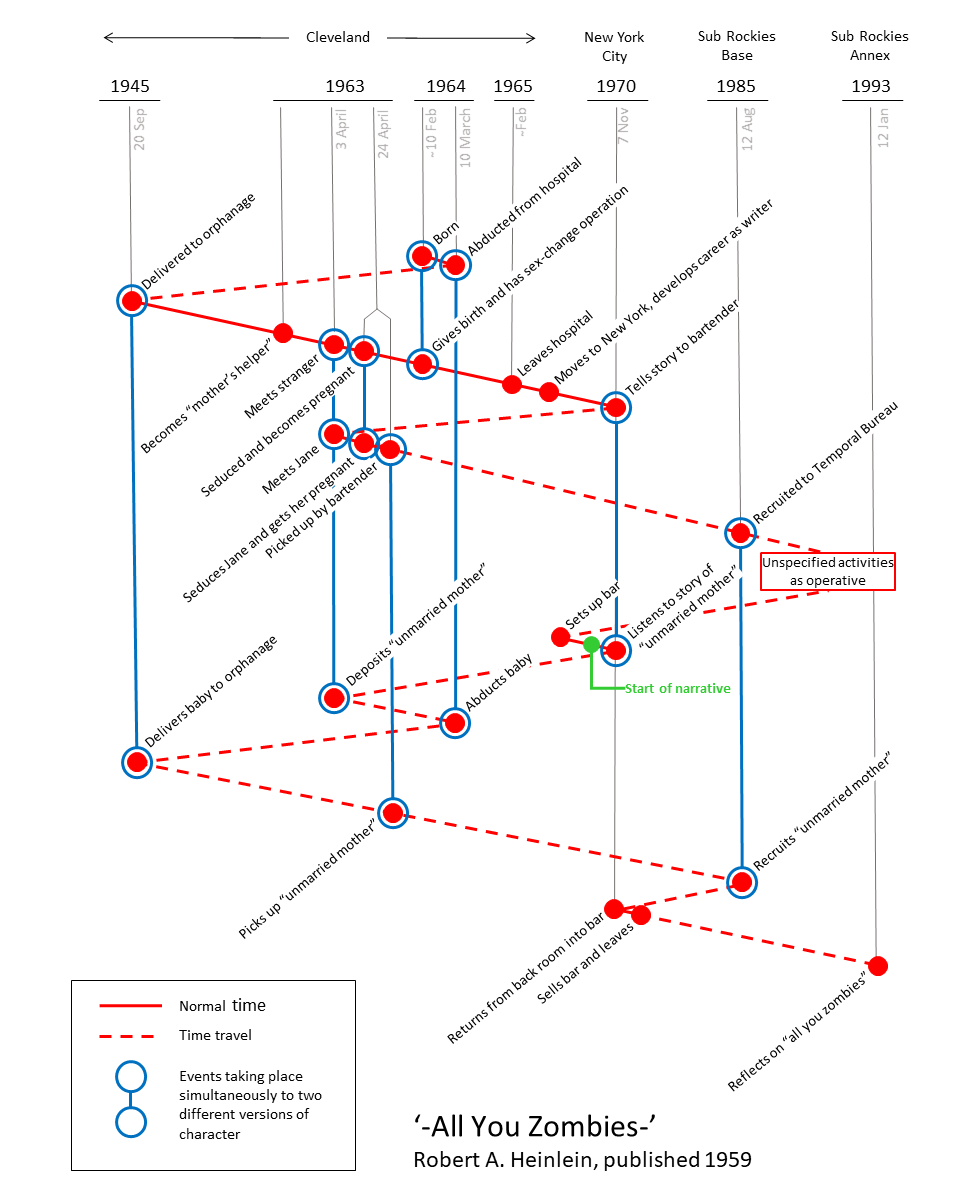
Robert Heinlein’s 1959 short story “–All You Zombies–“ accomplishes a kind of narrative hat trick: All the major characters turn out to be the same person, who takes on different roles through time travel and sex reassignment. The main character is his own partner, mother, father, and child.
Though it contains a number of paradoxes, Princeton philosopher David Lewis judged it to be a “perfectly consistent” time travel story. Ironically, Heinlein had written it in a single day.
In January, I released the results of an experiment showing how Claude Code could helpfully extend old papers “automagically.” It was pretty astonishing to me. Claude was able to come up with a plan, scrape the web, write code, run regressions, create tables and figures, and write a whole memo on what it had found—all in about 45 minutes.
Are AI tools perfect? No. Claude made some interesting mistakes in that extension, and since then, I’ve seen it make a whole bunch more. Are human researchers perfect, though? Hell no.
The evidence that AI tools should now be an essential part of your toolkit is overwhelming—look at the recent work that my Stanford colleague Yiqing Xu has put out, for example, which allows for the automated verification of empirical research. This is so clearly valuable. When it comes to empirical work, we’re never going back to the pre-AI world.
Here is a thread on the paper, heedworthy throughout. If you do not have some kind of decent plan here, other economists will leave you in the dust. Even if it is only a minority of “other economists” their total leverage and impact will be extreme.
Ludwig Straub is a professor of economics at Harvard University. His research areas are macroeconomics and international economics. Among his topics of interest are the recent decline in the natural rate of interest, rising levels of private and public debt, and the transmission of monetary and fiscal policy. Ludwig also has an active research agenda solving and analyzing heterogeneous-agent models. Among his most recent papers is a 2025 paper studying the short-run effects of tariff shocks.
Консольный порт в Sun-сервере могучая штука. У него три режима работы: так называемые ALOM, OpenBoot и собственно юниксная консоль. Между ними можно переключаться.
ALOM расшифровывается как Advanced Lights Out Manager. В смысле когда всё отвалилось и погасло, в живых остаётся только ALOM. 😀
Вот что происходит на консоли ALOM при подаче питания.
Hi everyone! We've just released Chrome Beta 147 (147.0.7727.55) for Android. It's now available on Google Play.
You can see a partial list of the changes in the Git log. For details on new features, check out the Chromium blog, and for details on web platform updates, check here.
If you find a new issue, please let us know by filing a bug.
An excellent and highly original movie, I cannot say much without infringing upon the surprise of the basic premise. Exquisitely choreographed in its timing, scene by scene. So anti-Woke that it will make some uncomfortable? The reviews which are very negative are unfair and stem from this fact. I recommend it, but yes some of you will go away feeling offended. I can report that one theme is that couples who are getting married often do not know each other well. Here is the trailer.
Your best bet is to figure out which artists were known for painting that type of scene in 90s... unfortunately the only one I know is Christian Riese Lassen, but I know there was a big trend for that subject matter, so I'm sure there are a lot more. Can any followers name any other artists?
This is it! It was "Our World" by Christian Riese Lassen! THANK YOU
Awesome, happy to help! It's a beautiful piece - take a gander, everybody.
ALT
90s tropical art is a little off-topic for 70s sci-fi, but I still love it! I have a couple vintage T-shirts of Christian Riese Lassen artworks very similar to this one.
Репортер: Сегодня вы заявили о желании захватить иранскую нефть, но американцы хотят, чтобы американские войска вернулись домой. Трамп: Верно. Я прежде всего бизнесмен. Война с Венесуэлой закончилась примерно за 45 минут. Мы захватили сотни миллионов баррелей. Победителю достаются трофеи. Почему бы нам их не использовать?
Репортер: Готовы ли вы положить конец этому конфликту с Ираном, взимающему плату за проезд через пролив? Трамп: Мы будем взимать плату за проезд? В: А Иран? Трамп: А как насчет того, чтобы взимать плату за проезд? Я бы предпочел это. Почему бы и нет? Мы победители. Мы победили.
Репортер: Вы сегодня ранее сказали… что хотели бы закупить иранскую нефть. Трамп: Верно. Если бы у меня был выбор… В старые времена жертве, ну, вы знаете, трофеи достаются победителю… В нашей стране этого не было, наверное, лет сто… Победителю достаются трофеи. Мы не слышали этого, я думаю, может быть, сотни лет. ( Read more... )
From the movie "[the interview]." Seth Rogan's character misunderstands his friend's (played by [James Franco]) phrase "they hate us cause they ain't us." The phrase is then [repeated] many times throughout the movie to sound like "they hate us cause they anus"
Сегодняшняя серия (сезон 8, эпизод 10, "Badlaa") - заняла, в моём личном рейтинге, высшее место. Из всего, что я на данный момент просмотрел. Badlaa - просто какая-то пирдуха, шедевральное зрелище.
Краткий сюжет: некий мелкий копчоный индус, пользуясь какими-то инфернальными кастовыми навыками - совершает путешествие из аэропорта Бомбея/Мумбая на территорию США в жопе белого американца-бизнесмена. Нет, я сейчас не стебусь и даже не преувеличиваю, ни на йоту.
Навыки этого факира-копчёныша заключаются в том, что он способен засрать мозги, глаза и уши кому угодно, выдать себя за другого (в том числе визуально) и т.д. Поэтому в Штатах он легко проходит рабочее интервью под чужой личиной и устраивается на работу. После чего начинает активно устраивать подлянки местным белым американцам, чем и занимается до конца серии.
Надеюсь, аффтары действительно решили завуалированно поехидничать над процессом массового завоза вонючих бомбейских и бангалорских насикомых в Штаты, который аккурат во время выхода 8-го сезона (2000..2001) набирал максимальные обороты.
Предыдущий, кстате, эпизод (9-й, "Salvage") - тоже стебалово из стебалова. Я ещё не упоминал, кажется, что в конце 7-го сезона - Малдера, типа, похитили лунапланетяне, и потому в 8-м сезоне напарником Скалли поставили некоего Джона Доггетта. А играет его, ВНЕЗАПНО, актёр Роберт Патрик. Знаменитый T-1000, жидкий робот из Terminator 2. Кстати, играет совершенно замечательно.
Так вот: 9-я серия почти на 100% состоит из беспардонных ссылок на Terminator 2, буквально в каждой сцене. А протагониста вчистую срисовали со Шварца: металл пополам с живой плотью, вот это всё - скриншотик под катом. Кажется, даже и сакраментальное "I'll be back" мелькнуло. И пресс в последнем кадре. Чистый стебняк. Как Патрику (да и остальным актёрам) удавалось не ржать на съёмках - лично я не очень понимаю :). ( Read more... )
In the 1990s, Americans used to work much more than non-Americans. Nowadays, about half of the gap in hours worked has reversed. To evaluate the convergence of working hours, we develop a tractable model of labor supply enriched with multiple sources of heterogeneity across individuals, an extensive margin of participation, multi-member households, and an elaborate system of taxes and benefits upon non-employment. Using detailed measurements from micro-level and aggregate datasets, we identify model parameters and sources of heterogeneity across individuals for various countries. We run a horse race between competing explanations and find that U.S. hours per person declined after 2000 owing mainly to the rise of government health benefits provided to the non-employed. Non-U.S. countries have generous benefits for the non-employed, but this generosity has not changed as much over time as in the United States, and public health coverage does not depend on employment status or income levels. For these countries, the rise of labor supply is generally accounted for by a mix of factors, such as the rise of wages and the falling disutility of work.
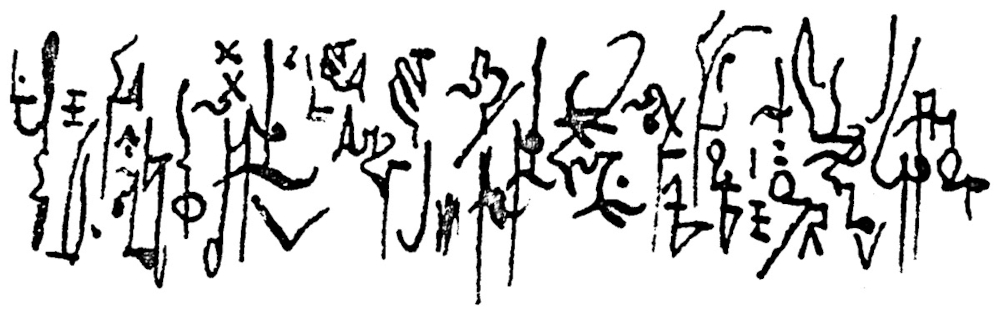
From 1906 to his death in 1922, Hungarian novelist Géza Gárdonyi kept a secret journal in a script so inscrutable that it wasn’t deciphered until 1965. He’d labeled the work a Tibetan grammar, but in fact it employed a calligraphic code founded in Hungarian using symbols that Gárdonyi had devised himself. In it he recorded his thoughts, observations, and literary plans. It was published in 1974 as Titkosnapló (“secret diary”).
Днепропетровскую область сильно обстреливают. Только за эту ночь-утро:
Погиб 11-летний мальчик в Синельниковском районе (русня обстреляла частный дом, где жил мальчик, его семья - ранены). Как минимум три человека погибли в Никополе в рейсовом автобусе, по которому ударил рашенский дрон, когда автобус подъезжал к остановке. 16 раненых.
Еще били по Апостолово и Павлограду, там без жертв.
Нетра пришла с уже установленным Солярисом, и конечно же, пароль на root неизвестен. Как его скинуть? ИИ подсказал процедуру. Благо загрузочный CD имеется.
1. Подключаемся к консольному порту, к примеру утилитой minicom из Линукса. 2. Выходим в режим загрузчика OpenBoot. Для этого отправляем сигнал Break. В миникоме это Meta+Z F. 3. Появляется характерное приглашение, так называемый ok промпт.
{1} ok _
4. Даём команду загрузки с CD в однопользовательском режиме.
boot cdrom -s
5. Ждём когда Солярис загрузится и выйдет на приглашение '#'. 6. Монтируем корневую файловую систему.
mount /devices/pci@1c,600000/scsi@2/sd@0,0:a /mnt
7. Редактируем файл /etc/shadow.
cd /mnt/etc
vi shadow
8. В самой первой строчке делаем пароль рута пустым. Сохраняем файл (:w!) и выходим из редактора (ZZ). 9. Перезагружаемся.
The interpretation of polygenic scores (PGS) for general cognitive ability (GCA) remains contested, with concerns about indirect genetic effects, environmental confounding, cross-ancestry portability, and the gap between PGS prediction and twin heritability estimates. Relying on a newly constructed PGS using within-family designs in two independent sibling cohorts (UK Biobank, N=4,642 pairs; ABCD, N=736 pairs), we demonstrate that direct genetic effects account for the large majority of PGS prediction (within-family attenuation \delta / \beta \approx 0.88). Correcting for measurement error in brief cognitive assessments, the within-family association with latent general ability is approximately 0.45, substantially higher than observed-scale estimates. Cross-ancestry portability follows theoretical expectations (66% effect retention in African Americans). Within families, higher PGS predicts greater educational attainment, occupational status, and reduced cardiometabolic disease risk, with no evidence for gene-environment interactions or substantial adverse pleiotropy. These findings replicate using a benchmark predictor based on publicly available data, confirming they reflect properties of cognitive genetic architecture rather than idiosyncrasies of a particular score.
![[syndicated profile]](https://www.dreamwidth.org/img/silk/identity/feed.png) futilitycloset_feed
futilitycloset_feed


 ALT
ALT
![[personal profile]](https://www.dreamwidth.org/img/silk/identity/user.png) vak
vak
 ALT
ALT


ALT